
Why Colors Have Such an Impact in a Room
Have you ever noticed how a room suddenly feels warmer just because the rug hits the right tone?
Colors are not a side issue. They shape mood, taste, and the overall effect of a space. Rugs play a special role because their area is large and their influence is accordingly noticeable. That’s exactly why I developed a color palette that works across all Artacarpa qualities. Not just on a screen, but especially on real material.
The small big hurdle in carpet printing
There is no binding standard in carpet printing. Every machine has character, every manufacturer has their own processes, every material its quirks. A digitally defined color is far from a guarantee for the tone on the carpet.
A fresh orange can suddenly drift to the reddish neighboring color on the pile. So I needed an internal stable reference that remains reliable.
I didn’t want to change the production processes or add special requests. Extra interventions sound tempting and sometimes bring quick wins, but in the long run they create new sources of error, since familiar processes for making individual carpets would have to be rethought over and over again.
Especially with automated data processing, this only makes things more complicated and error-prone. Accordingly, all internal processes are optimized for the respective manufacturers, which was a major challenge especially internally for creating print data, which runs almost completely automatically.
My path to a stable palette
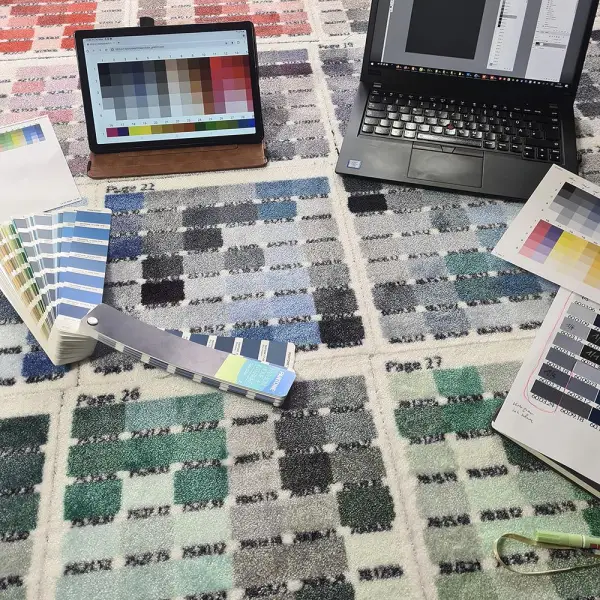
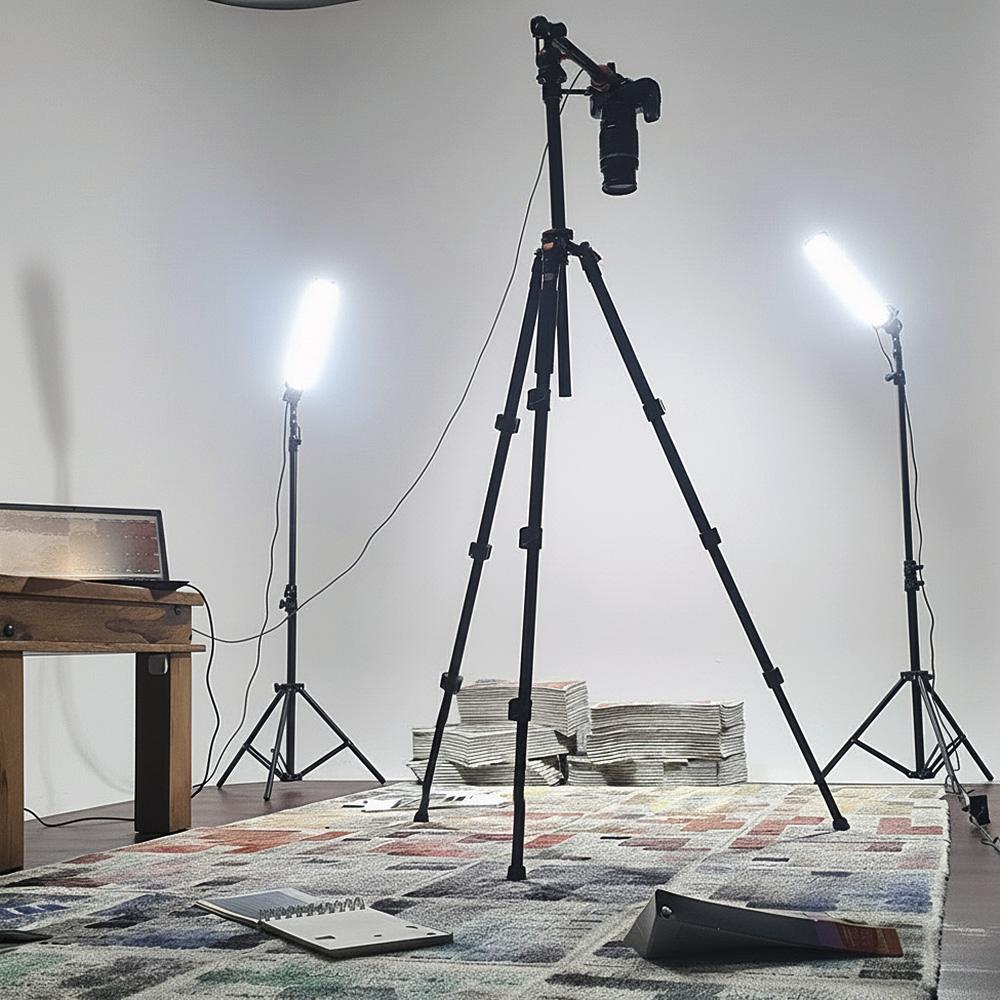
The path was patient and followed clear routines. Repeated test prints, controlled light, targeted adjustments of the digital color values, and careful documentation.
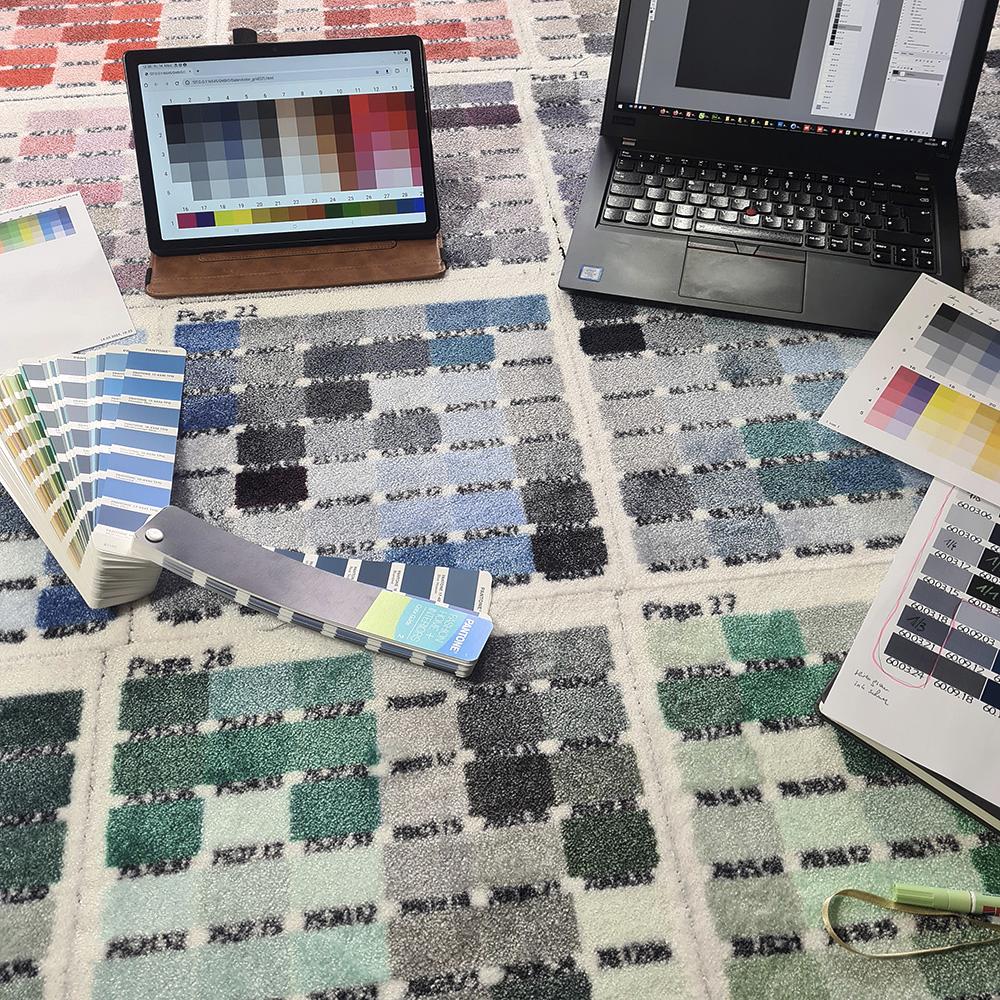
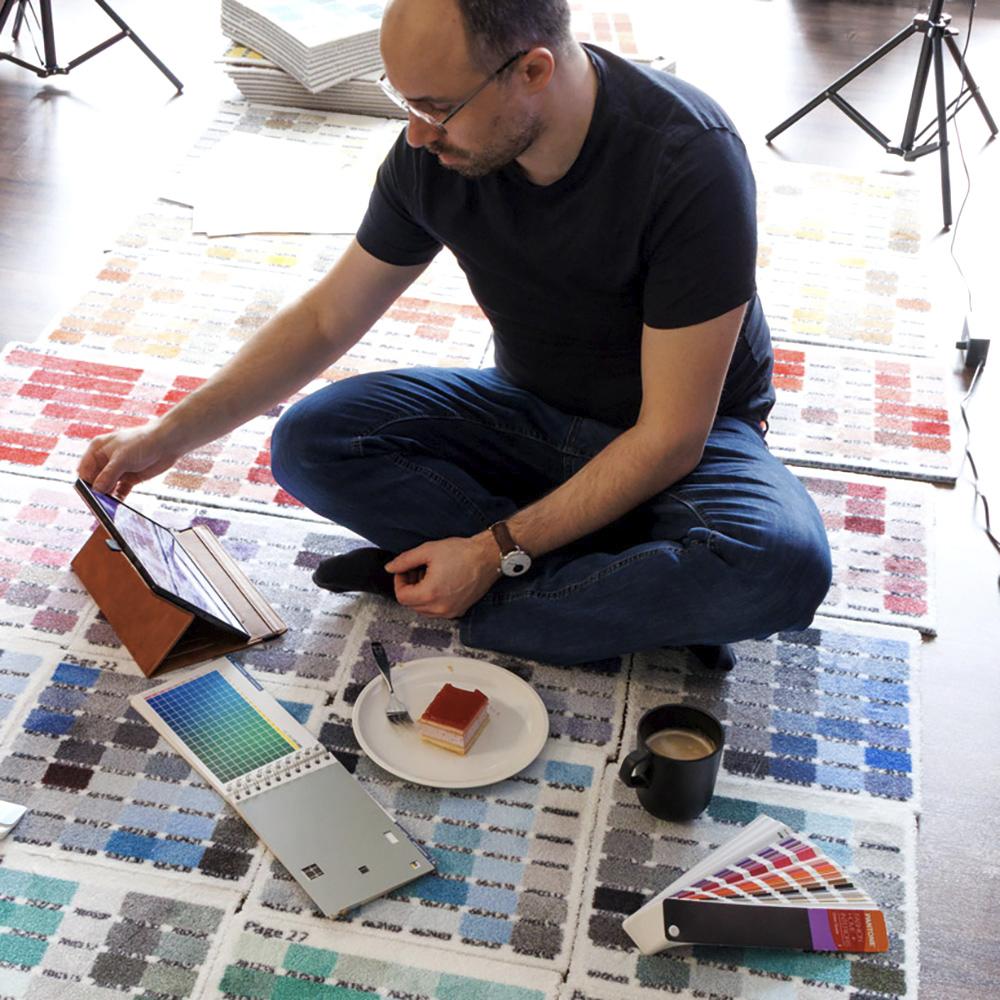
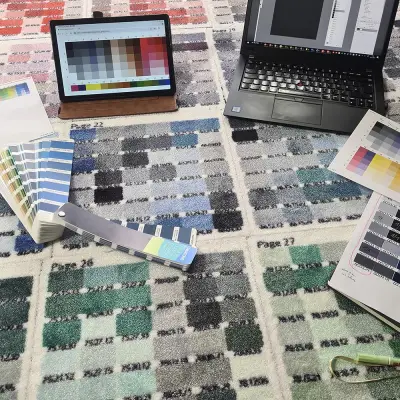
The process was a cycle. Test prints, check, optimize values, more test prints, check again, optimize again, and so on. Hundreds of small color patches wandered across my floor.
Only a sample in hand tells the truth; it works on the screen, it shows itself on the pile.
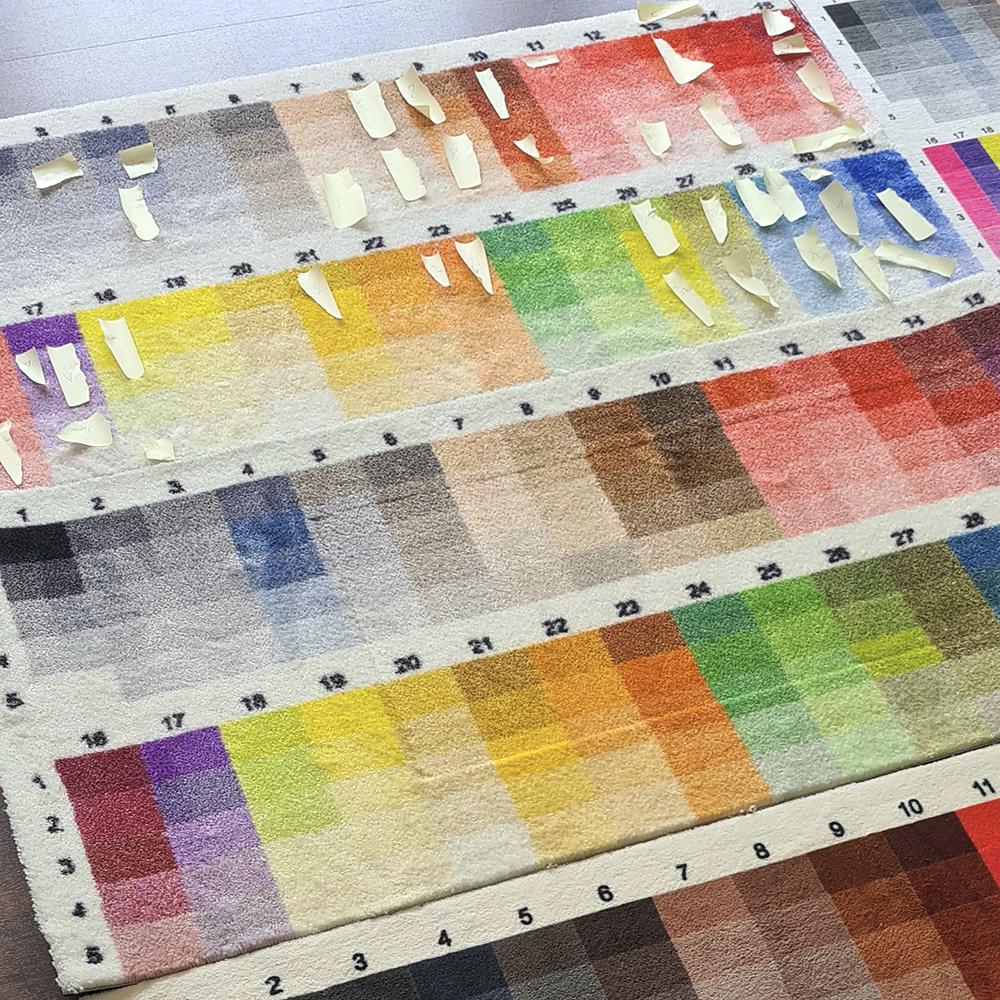
I immediately transferred decisions into Excel, entered them in parallel into my own tool, and noted them on Post-its. More than once a carpet lay in front of me, covered with yellow sticky notes, optimizations, comparisons with the other qualities, and so on.
At first glance it looked like pure chaos. In truth, of course, it was a system. Until my impatience came into play: one sleeve, one swipe, and the yellow notes were shuffled around. Practical, but not exactly nerve-proof.
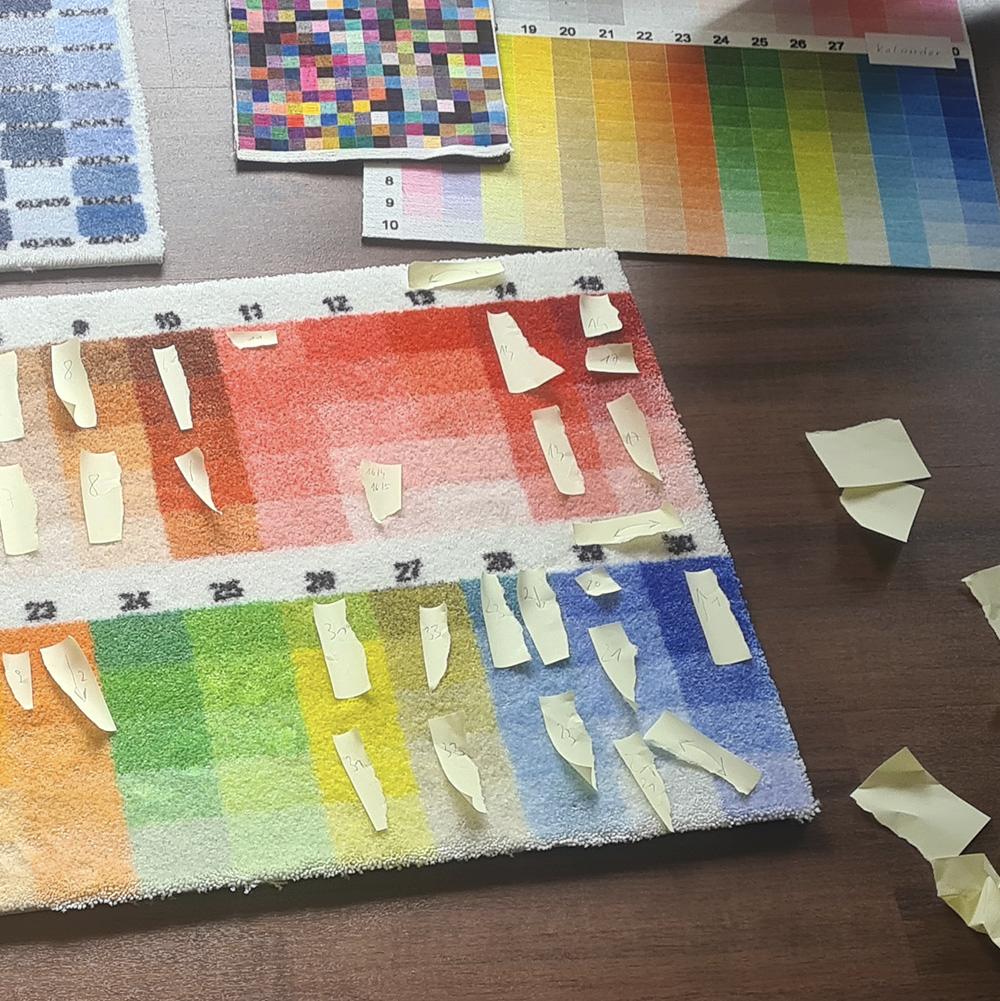

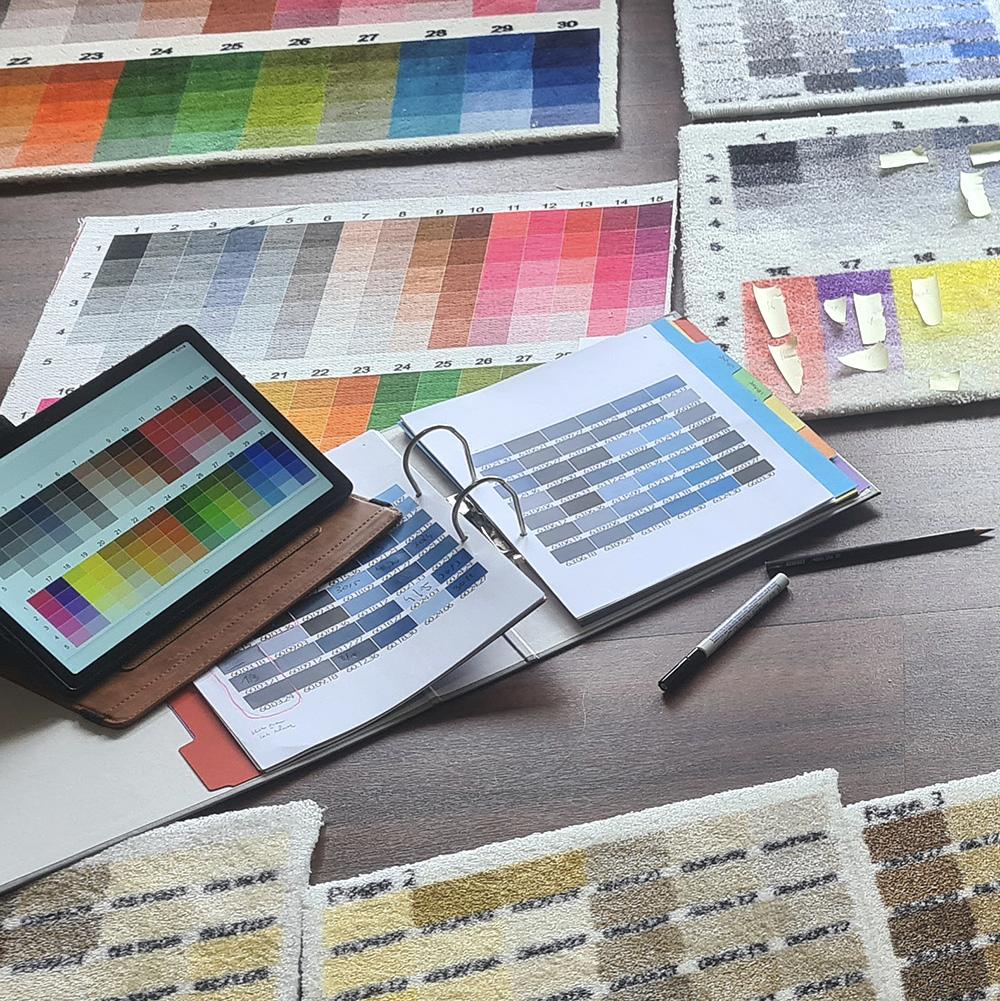
In any case, it gradually helped me adjust, compare, and refine palettes in a targeted way. I got closer and closer to my goal of a stable base, and better to check once too often. Because a wrong value (and there are 450 values) in the foundation can later affect hundreds of designs, which would then have to be manually reworked.
Three qualities, three printing systems, one color system
To make the palette work everywhere, I balanced it across three qualities.
-
Level 1, the base
Short pile, precise and detailed. This quality reproduces fine nuances very cleanly and served as my color reference. -
Level 2, close to it
Cuddly soft pile with deep color. The color families remained the same, but red and yellow showed slight deviations. Warm yellow tones became deeper and richer due to the fiber, sometimes also more matte. Digital corrections brought the values closer to the reference again. -
Level 3, the biggest challenge
Premium quality with premium problems. Color penetration and Chromojet printing are a stubborn duo. The process works coarser, print dots are visible, colors mix directly on the carpet.
Less color does not mean lighter, but less application. Dyes fix at different speeds. The yellow base color can fix faster and a planned green tips into a restless mix.
The pile fiber reacts differently depending on the manufacturer and batch, not to mention color fluctuations due to temperature fluctuations. Consistent color consistency is already a production challenge, but with my production partner it is ensured within tolerable fluctuations. Accordingly, the palette here must be built stably so that it harmonizes with the other 2 palettes and works with the designs.
To stabilize the palette, I repeatedly compared and documented ~ 1000 printed colors at Level 3. In many areas, especially technical areas in the shop, I barely made compromises, but at Level 3 compromises were part of it because technically there was no other way.
Especially with red-heavy colors. I had to reinterpret these tones on the Chromojet so that the overall effect of the designs remains consistent with the reference.
The overall effect fits, but the difference is of course there. I couldn’t show that in the shop itself, otherwise it would probably take a separate section called “Magenta, but only on this machine and only this design”. That would have gone way too far and probably no one would have understood it anymore. I prefer to explain it directly and without detours for the respective order and the respective design.
Digital helpers
To be able to build the color palettes efficiently at all and keep them stable in the long term, I used a small tool that I developed last year and described here.
In it I could repeatedly define, change, compare, refine, and document the 150 colors cleanly. The tool accepts RGB, HEX, or HSL values, automatically calculates intermediate color steps, and allows you to make colors lighter, darker, or more saturated. The tool now also works with fixed color values, instantly generates color palettes and print data. This allowed me to test every nuance precisely and quickly, archive it at the same time, access it later, make changes, test quickly again, and so on.
Building on that, Photoshop comes into play:
With a script, it checks which reference color in the respective design needs to be adjusted on Level 2 or 3. This process runs automatically for all 150 colors and creates a new file with the updated color values. This creates print data that directly matches the desired palette, without manual readjustment.
Order data is also read in by the script; Photoshop then generates the sizes based on it and takes into account the settings of the printing systems and so on… and right now I realize I’m drifting into tech-nerd mode again; maybe I’ll go into more detail in one of the next blog posts, because technically it was a whole adventure of its own :)
Physical references instead of just pretty pictures
When the final color palettes were worked out, I still wasn’t finished.
For communication with customers, I publicly use the RAL system. It is widespread and the fans are available at fair prices. Internally, I also work with other color systems so that experts get a precise basis.
The final color match was a particularly laborious and extremely monotonous act. Honestly: I often put off this work, started briefly, determined a few colors, and then stopped again, because you lose the desire immediately. It was endless comparing, noting, transferring into Excel. Anyone who has ever created a palette in this field knows: for such palettes, maybe 30, 40, at most 100 colors are recorded because the process is slow and yes, nobody wants to do it.
I did it anyway because it was important to me and it allowed me to offer another option to communicate colors, especially in the shop. In the end there were 450 referenced colors. Only after I was done did I unfortunately learn that the licensing costs for exactly this reference system were too high for me. The entire process had to be repeated with another reference, in this case RAL, hooray.
Take a deep breath, don’t think, keep going :D
The principle was simple, but yes…:
You take the color fan, look at a color on the carpet, find the closest value in the fan, note the number, and move on to the next one. Again and again, color by color. I also had to make compromises again and again; do I take this value or the other one?
On top of that, there was the constant challenge of comparing a paper fan with a carpet. Depending on the light, depending on the viewing angle, the results look different, one person sees it this way, another that way, and accordingly determining a color does not take just a few seconds.
It’s never perfect, but it’s the industry standard. And in the end reliable enough, because it gives customers and experts a clear orientation. If it has to be very exact, there is always the option of additional sample prints.
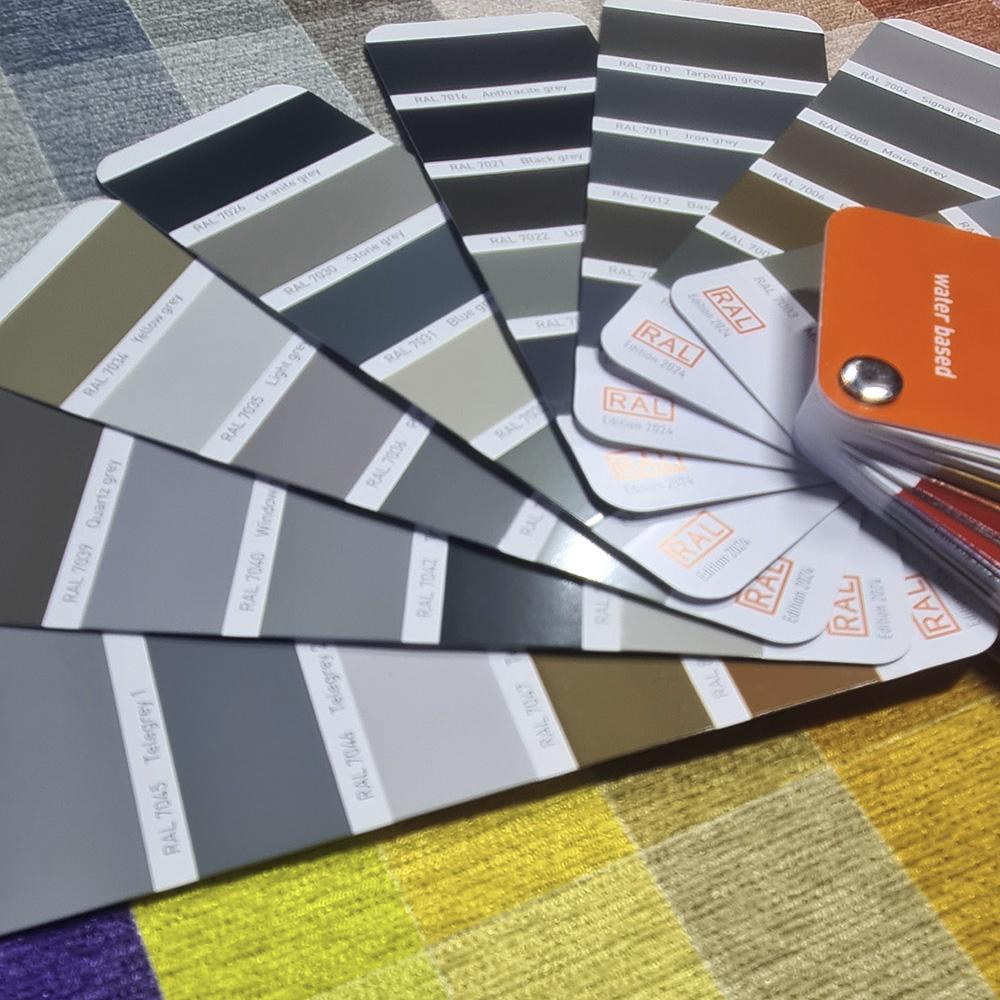
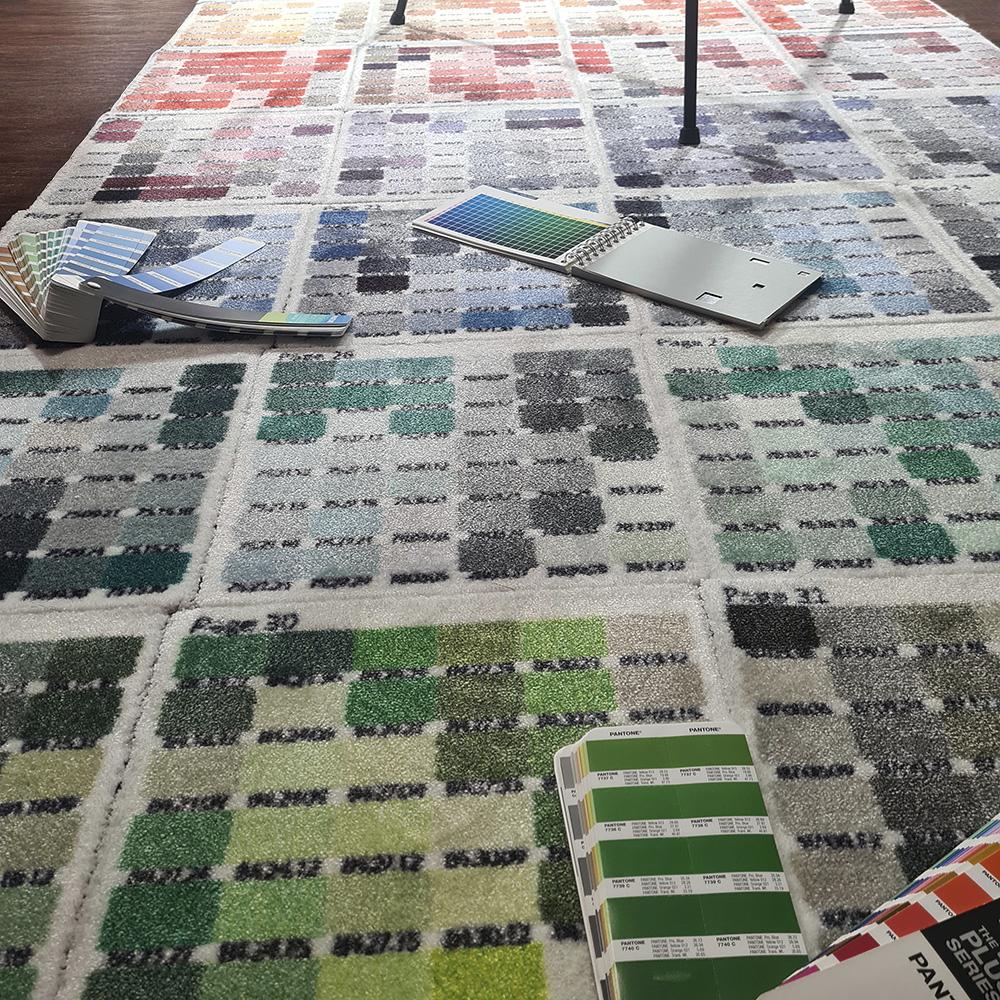
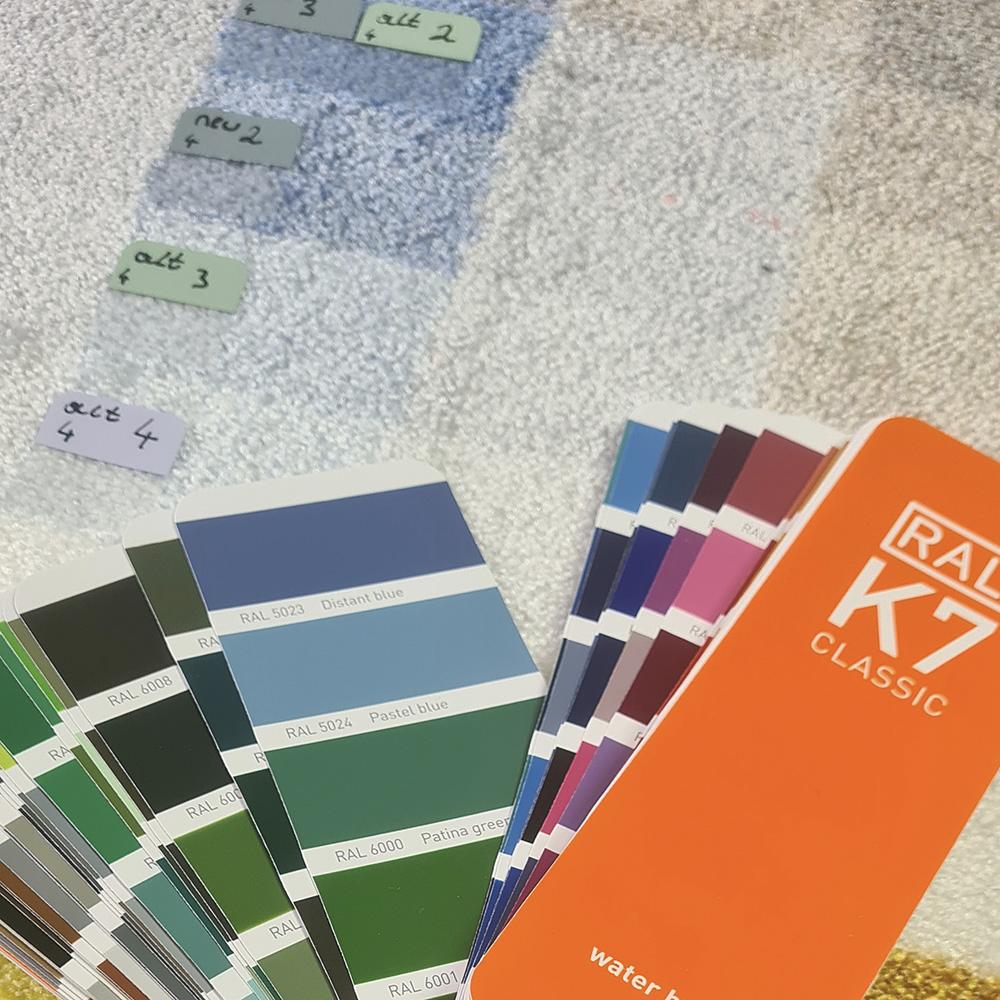
In such moments you ask yourself why you put yourself through it, even though these details are not often asked for.
But this is exactly where the advantage of having your own shop lies, and probably also the result of my experience. I can introduce features I always wished for elsewhere. So I build them in consistently, even if I sometimes lose myself in the process. And in the end the question remains whether anyone really notices all the little extras, but it doesn’t matter, I can’t help it anyway. It’s like an itch you can’t get rid of :)
Experience meets statistics
You could say the palette is based on 20 years of experience in the carpet industry, on my daily work with carpet designs, my knowledge of the machines in the background, and on statistical evaluations. Which colors are in demand, which hardly at all. This knowledge helped set the right priorities and make the palette future-proof. Want to dive into the numbers? I’m preparing a separate post on that.
How to use the palette in the carpet overview
In the overview you can filter all designs by colors, not just by base colors, but also by the individual tones of the 150 palette. In addition, matching RAL values can be filtered out, a small extra that is particularly interesting for interior architects, interior designers, or anyone who wants it a bit more precise.
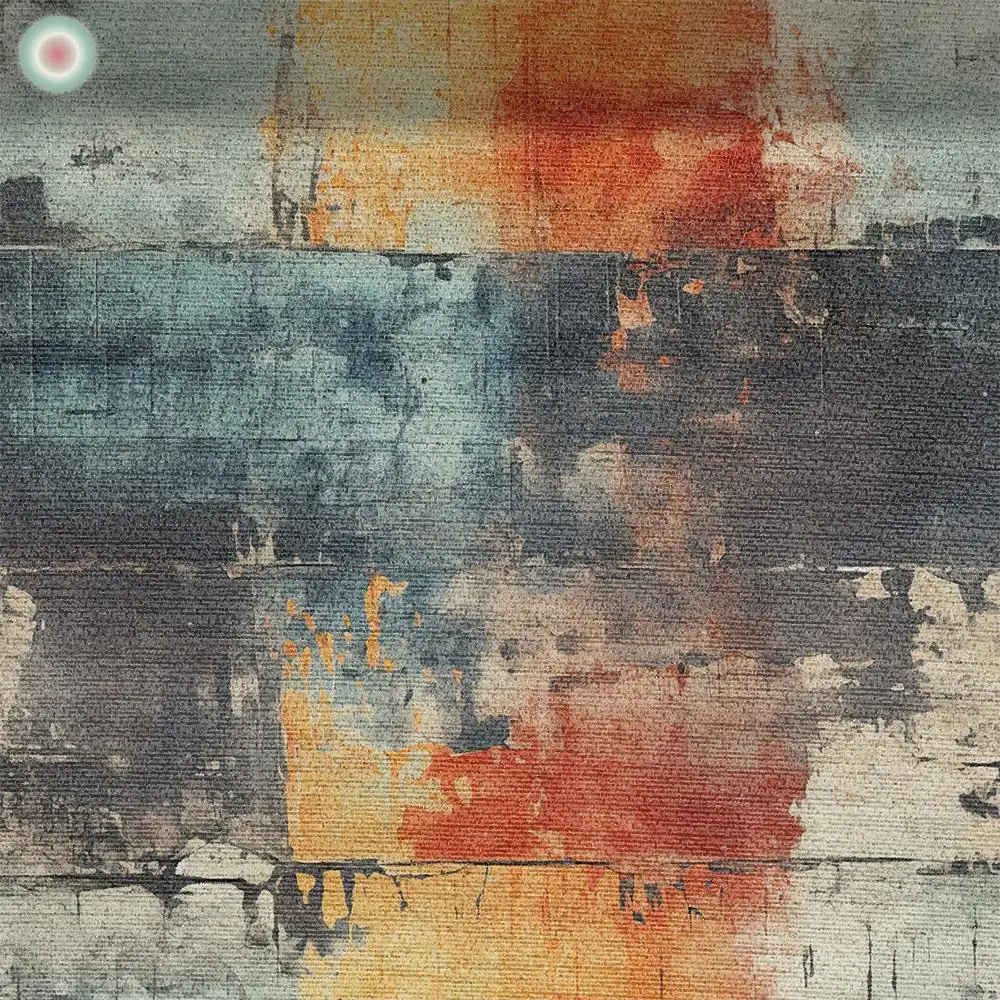
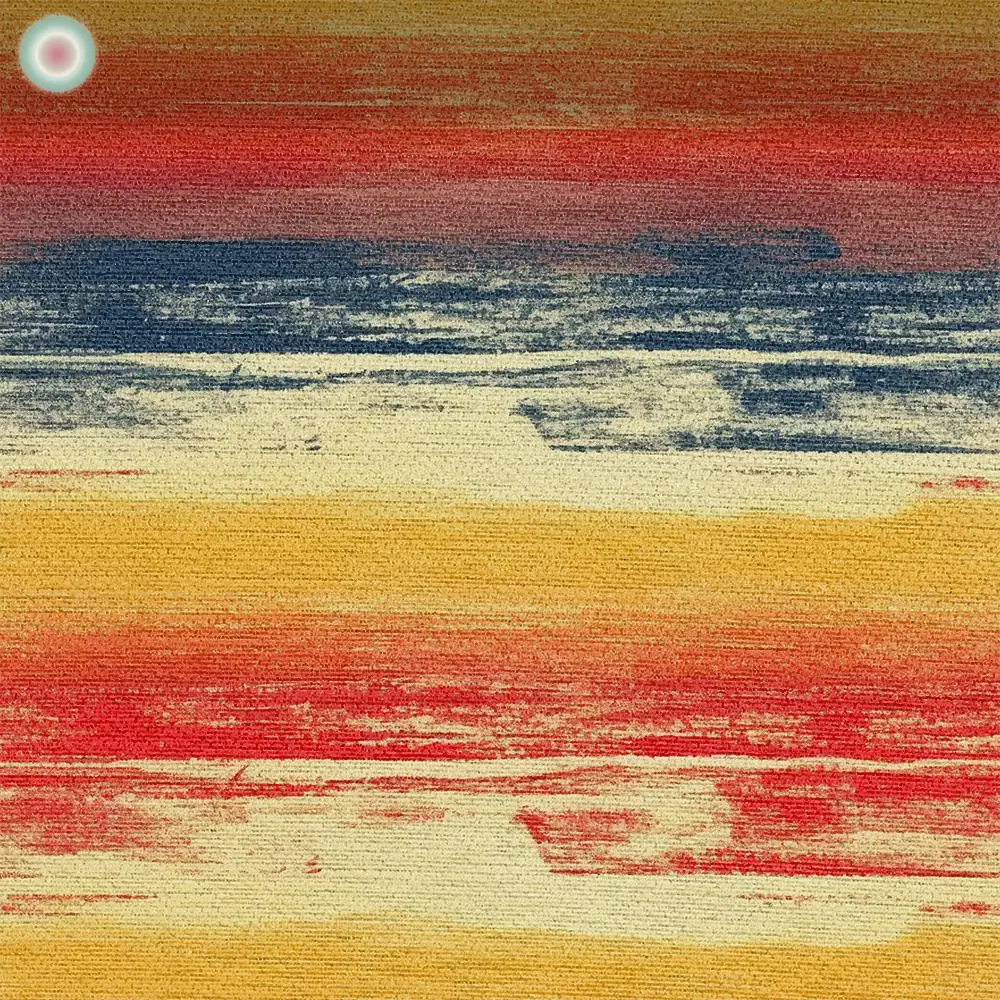
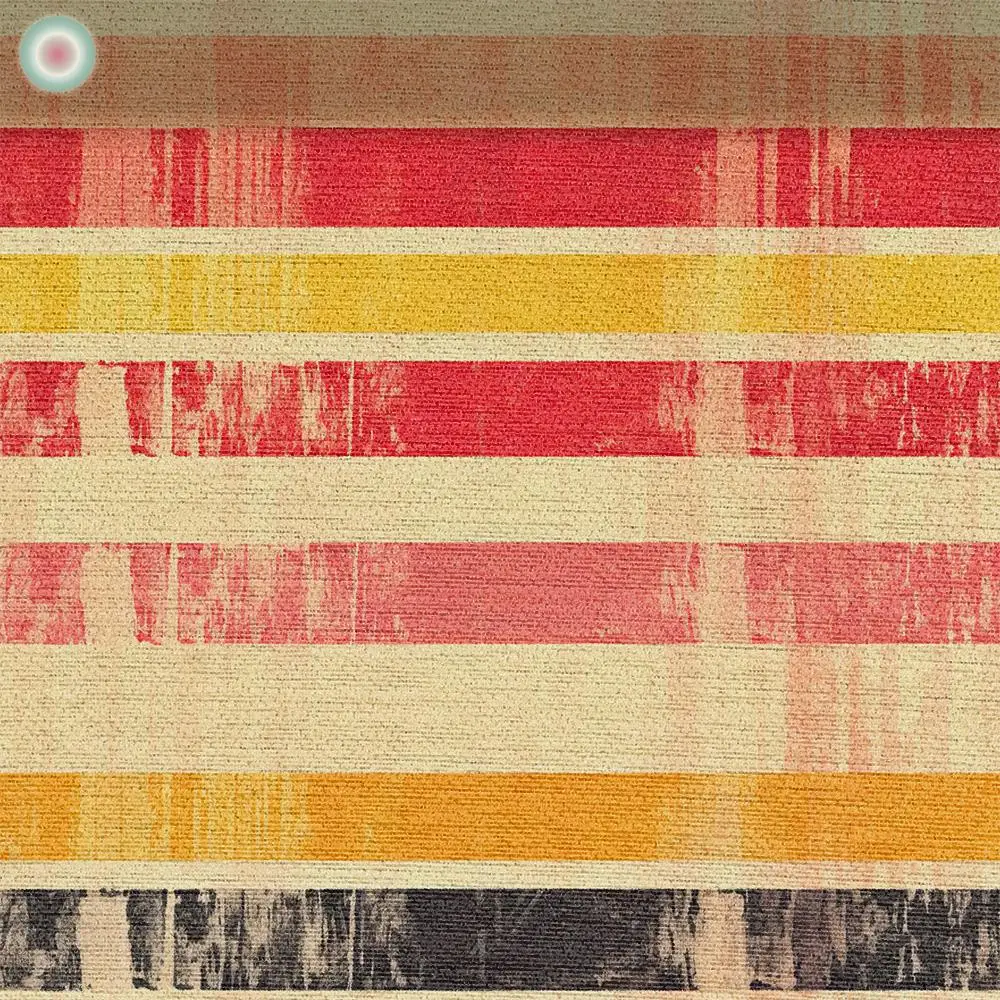
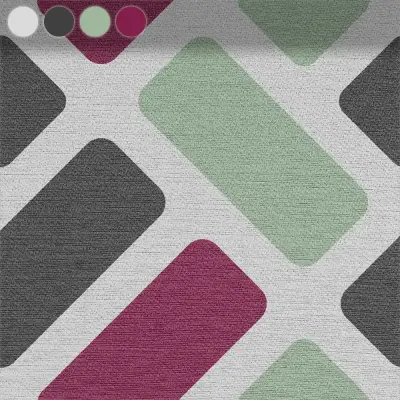
In the overview photos you will see a small HD color dot at the top left if the colors would be printed 1:1 by the machine without prior definition, or colorful color circles that exactly match the defined colors in the design. This way you can see at a glance which tones are contained in the carpet. This function seems inconspicuous, but is technically surprisingly elaborate and another small special feature in the shop.
Conclusion
Color palettes are the foundation of every carpet designer. The path for the Artacarpa palettes was long, test-intensive, and sometimes nerve-wracking. The result is palettes that work reproducibly on the carpet and remain comprehensible for customers and professionals and, above all, are consistent across many designs.
Do you want to see how your favorite room blossoms with the right color? Then browse now in our autumn collection and filter for exactly the motifs that suit you.
Recommended carpet designs
Latest Blog
Development of carpet colors at Artacarpa
Why Colors Have Such an Impact in a Room Have you ever noticed how a room suddenly feels warmer just because the rug hits the right tone? Colors are...Read More
Done! Welcome to Artacarpa
It feels almost a little unreal to write these lines. The time has come. The shop is online. And honestly, I can hardly believe it myself. After over ...Read More